Each year, the Federal Agency for Nuclear Control (FANC), in collaboration with the Indoor Environment Analysis Services (SAMI) of the 5 Walloon provinces and the Regional Cell for Indoor Pollution Intervention of Bruxelles Environnement (CRIPI), organizes the Radon Action. This campaign aims to inform about the dangers of radon, encourage residents to conduct measurements, and assist them with prevention and remediation.
Radon, an odorless, colorless, and tasteless radioactive gas, is naturally present in soils and rocks. It can infiltrate homes through cracks in the subsoil, sanitary equipment, or water supplies, and accumulate indoors. While harmless outdoors, prolonged exposure in an enclosed space, even at moderate concentrations, increases the risk of lung cancer, being recognized as the second leading cause after smoking by the WHO. This risk is amplified in smokers.
In Belgium, the southern part of the country is more exposed due to the nature of the subsoil, particularly in the regions of Verviers, Bastogne, Neufchâteau, Dinant, Marche, and Brabant Wallon. The FANC's interactive map allows visualization of average radon levels by commune. Communes marked in red indicate that over 10% of homes exceed the reference level of 300 Bq/m³.
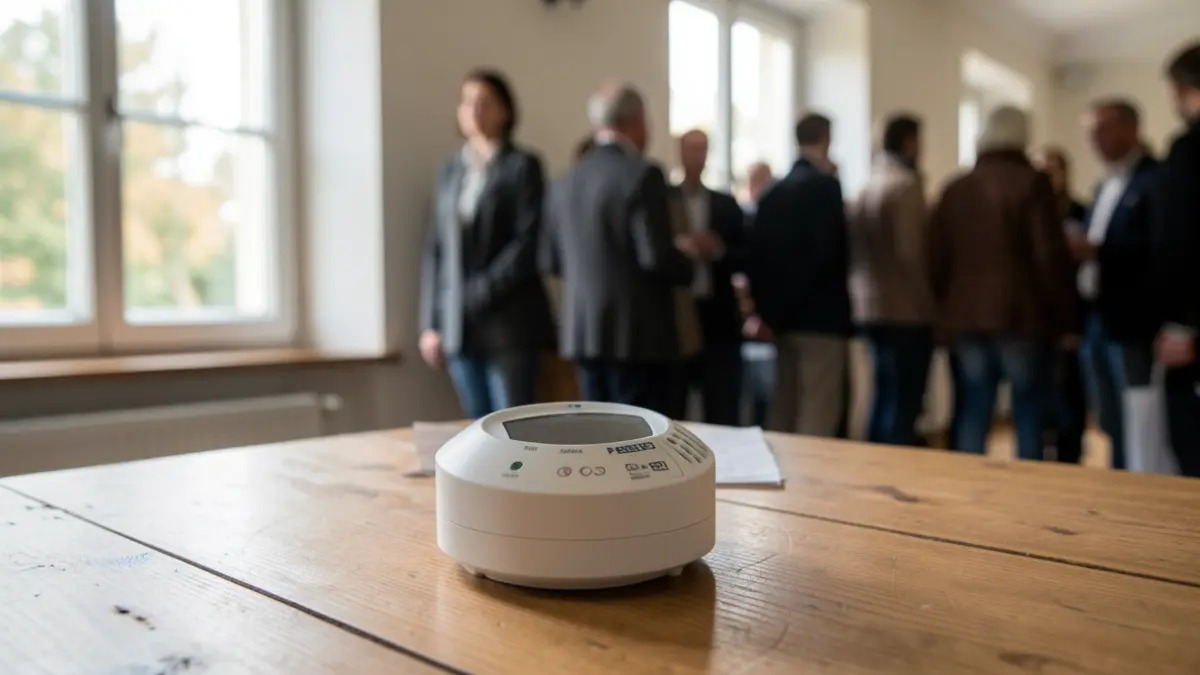
To determine radon levels at home, measurement is essential. During the Radon Action, a detector can be ordered online for €20 (analysis included). This device should be placed for three months between October and April in the most frequented room on the ground floor, then returned for analysis. A result below 300 Bq/m³ requires no specific action, as good ventilation is sufficient. Above this level, the FANC and SAMI experts offer remediation solutions.
Participating in Radon Action 2026, which runs from October 1st to December 31st, is a simple step to protect your health and that of your family. More information is available on the FANC website.