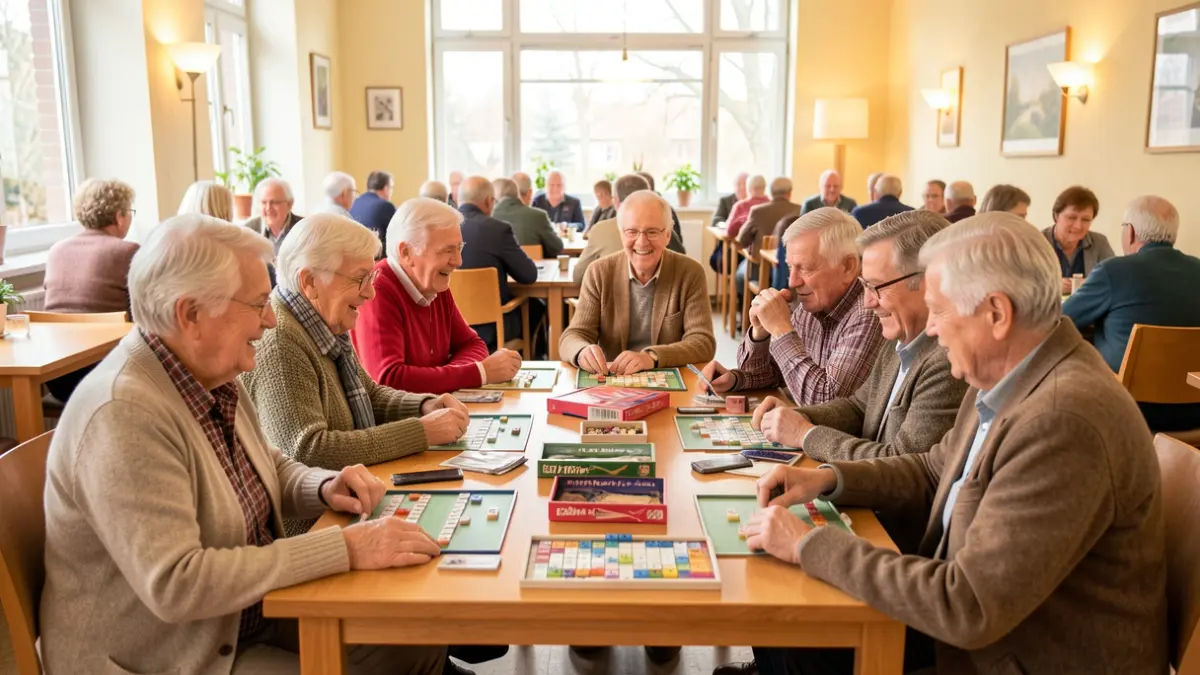

The question of how teachers can better understand children and adolescents and address their individual needs was the focus of a joint event by the Autonome Hochschule Ostbelgien (AHS) and the Education Committee of the Parliament of the German-speaking Community on the occasion of World Teacher's Day. Over 60 participants gathered at the AHS on October 8, 2026, to discuss the importance of pedagogical diagnostics in everyday school life.
After welcoming remarks by AHS Director Isabelle Weykmans and Liesa Scholzen, chairwoman of the Education Committee, Prof. Dr. Lucia B. Amrhein from the University of Duisburg-Essen opened the evening with an impulse lecture. Heike Verheggen moderated the event.
After welcoming remarks by AHS Director Isabelle Weykmans and Liesa Scholzen, chairwoman of the Education Committee, Prof. Dr. Lucia B. Amrhein from the University of Duisburg-Essen opened the evening with an impulse lecture. Heike Verheggen moderated the event.
Under the title "Ten Seconds – Pedagogical Diagnostics Between Categorization and Understanding," Professor Amrhein illustrated that diagnostics encompass far more than standardized tests, reports, or identifying a need for support. It is an essential component of professional pedagogical action.
Using an everyday teaching situation, she demonstrated how teachers perceive, interpret, and react to a child's behavior within seconds. The key is not to jump to conclusions or attribute behaviors to a child's specific traits, but to understand possible backgrounds and needs.
Using an everyday teaching situation, she demonstrated how teachers perceive, interpret, and react to a child's behavior within seconds. The key is not to jump to conclusions or attribute behaviors to a child's specific traits, but to understand possible backgrounds and needs.
Professional diagnostics therefore require a conscious and reflective approach. Scientifically founded knowledge must be combined with an understanding of a child's individual life and learning situation. It is important to critically question one's own assumptions and to include different perspectives.
With the "Smart Action Loop," Professor Amrhein also presented a practical model that supports educational professionals in acting thoughtfully and relationally, even in challenging situations. The focus is on understanding behavior, developing reasoned hypotheses, and deriving appropriate pedagogical measures.
With the "Smart Action Loop," Professor Amrhein also presented a practical model that supports educational professionals in acting thoughtfully and relationally, even in challenging situations. The focus is on understanding behavior, developing reasoned hypotheses, and deriving appropriate pedagogical measures.
In the subsequent panel discussion, the focus shifted to pedagogical practice in Ostbelgien. Lara Emonts and Thierry Dodémont from the kindergarten of the César Franck Athenaeum Kelmis, Elena Wersand from the primary school of the Royal Athenaeum St. Vith, Catherine Nütten from the Robert-Schuman-Institut Eupen, and Christoph Heeren from Kaleido shared their experiences and challenges.
The importance of collegial and multiprofessional exchange became particularly evident. Different perspectives help to understand the behavior and learning needs of children and adolescents in a more differentiated way and to jointly develop suitable support options.
The importance of collegial and multiprofessional exchange became particularly evident. Different perspectives help to understand the behavior and learning needs of children and adolescents in a more differentiated way and to jointly develop suitable support options.
At the same time, it became clear that such collaboration requires time, appropriate structures, and the support of school leadership. Trusting cooperation with parents also plays an important role.
The discussion with the audience also addressed the tension between necessary diagnostic categories and an individual approach to children and adolescents. Diagnoses can help enable support measures but should not lead to reducing individuals to single characteristics or difficulties.
The discussion with the audience also addressed the tension between necessary diagnostic categories and an individual approach to children and adolescents. Diagnoses can help enable support measures but should not lead to reducing individuals to single characteristics or difficulties.
The evening made it clear that pedagogical diagnostics do not primarily serve to categorize and evaluate, but to understand and support learning and development processes. This requires professional competence, a reflective pedagogical attitude, and the willingness to constantly question one's own perspectives.
With this event, the AHS and the Parliament continued their joint series of events for World Teacher's Day, which has regularly provided a space for exchange on central issues of education and teaching since 2016.
The evening concluded with a joint reception and further discussions.
With this event, the AHS and the Parliament continued their joint series of events for World Teacher's Day, which has regularly provided a space for exchange on central issues of education and teaching since 2016.
The evening concluded with a joint reception and further discussions.