
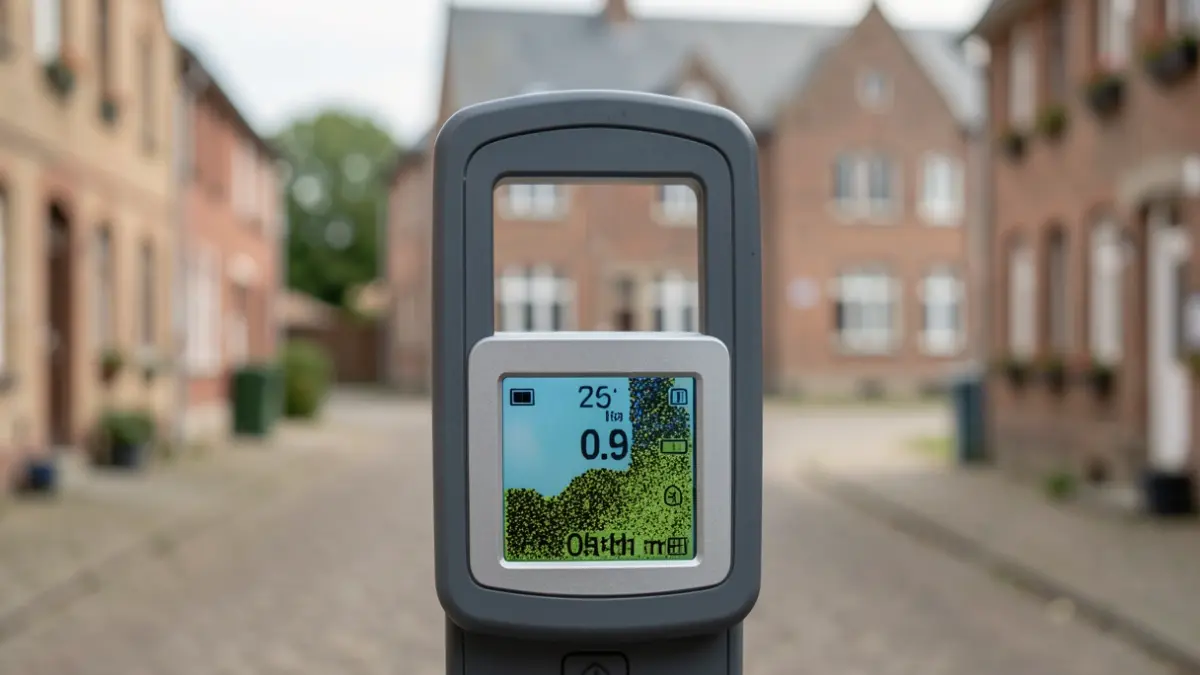
As part of the Pure Cities project, led by Airscan with financial support from Belfius, three sensors measured air quality in Geer from August 2025 to August 2026. The collected data confirms an overall very satisfactory air quality.
The devices were installed at three strategic locations: rue du Centre (near the municipal school), at Agrigeer, and on rue Georges Massa. They continuously monitored fine particles (PM2.5), coarse particles (PM10), and nitrogen dioxide (NO2), a gas primarily linked to road traffic.
The results obtained classify Geer in the 'excellent' to 'good' category according to the European Union's 2030 thresholds. The average for fine particles (PM2.5) is 4.6 µg/m³, well below WHO recommendations (5 µg/m³) and the European limit (10 µg/m³). PM10 particles show an average of 8.8 µg/m³ (EU2030 threshold: 15 µg/m³), and nitrogen dioxide (NO2) averages 10 µg/m³, falling into the 'good' category.
However, particular vigilance is noted on rue du Centre, where peaks of nitrogen dioxide pollution are observed during school drop-off and pick-up times. This exposure is concerning as children, being more sensitive, breathe more air. The municipality reminds the public of the importance of turning off vehicle engines when parked to protect the health of the youngest.
Air pollution remains a major public health issue in Europe, responsible for hundreds of thousands of premature deaths annually. Although pollution levels have significantly decreased since 2005, continuous monitoring is essential to maintain this positive trend.
These measurements confirm the good environmental quality of Geer. The municipality, in collaboration with Airscan and Belfius, is considering concrete actions to preserve and further improve this environment, particularly concerning road traffic and wood heating, which is a significant source of fine particles.