
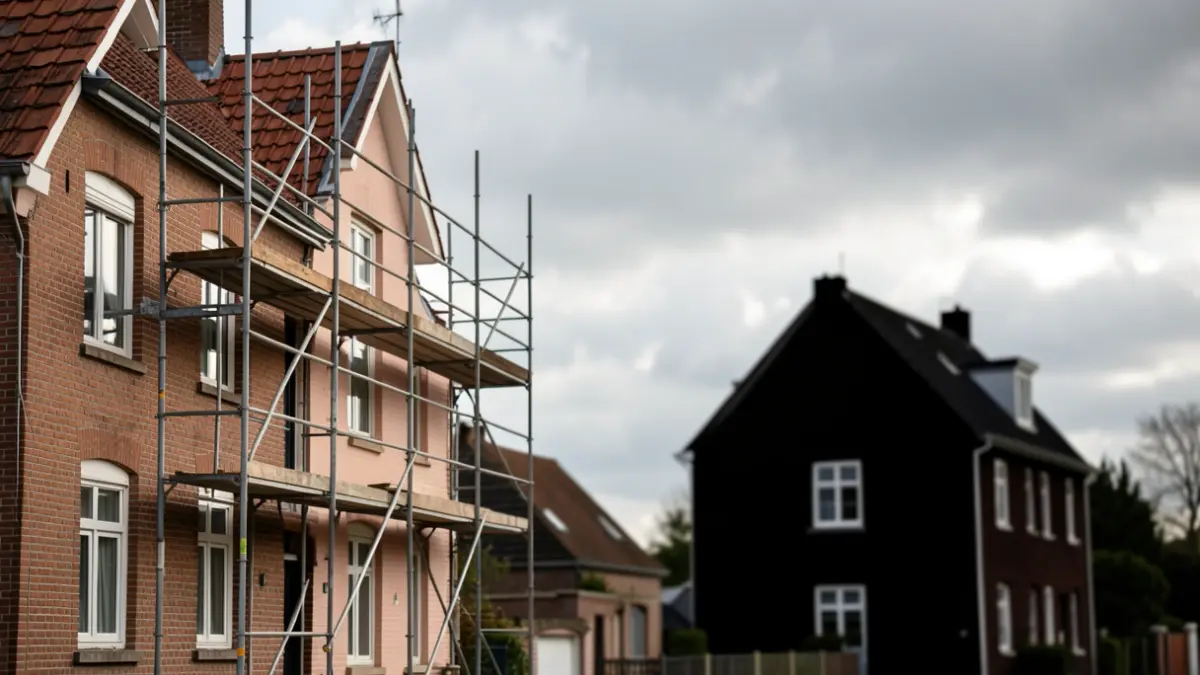
Despite the repressive tools available to municipalities, such as fines or property management, the problem of unoccupied housing remains complex. In Seraing, where the phenomenon is particularly acute with approximately 900 likely vacant homes, and in Flémalle, the REnovINOC project offers an innovative approach: free, tailored support for owners. Vacancy not only causes nuisance and property devaluation but also exacerbates the difficulty for many citizens to find decent housing.
Gwendoline Framba, project coordinator at Eriges (Seraing's autonomous municipal agency), notes that traditional repressive methods are often energy-intensive and lack sufficient follow-up. Leveraging a project call, REnovINOC aims to explore an alternative path. The goal is to enable owners to make objective and informed decisions about their vacant properties, whether to sell them, demolish them, or ideally, renovate them for rental through a housing promotion association (APL) or a social real estate agency (AIS).
The project begins with identifying unoccupied properties and raising owner awareness, including sending brochures detailing risks and possible solutions. Willing owners then receive free on-site support. A technical and financial analysis is conducted for each property, covering necessary works, budget, potential sale price or rent, and associated costs. The aim is to alleviate the emotional burden often associated with these properties, thereby facilitating decision-making.
REnovINOC is also developing a sales coaching component to assist owners after their decision, guiding them through the necessary administrative and marketing steps. For those opting for renovation, free support is available through the Local Platform for Energy Renovation of Seraing.
In parallel to these field actions, the REnovINOC team is conducting broader research to develop a replicable action methodology for the entire Walloon Region. A key validated hypothesis is that owners welcome this support, which helps them overcome years of procrastination in deciding the future of their vacant properties.